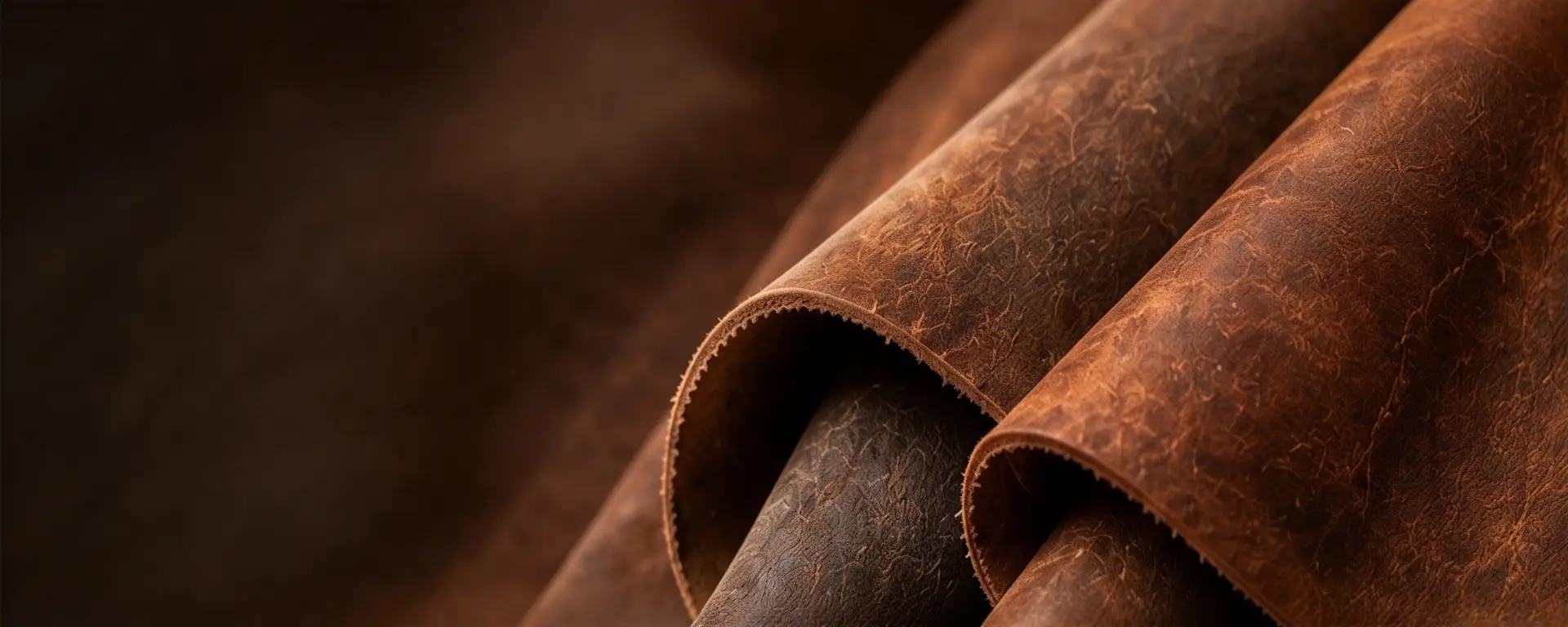
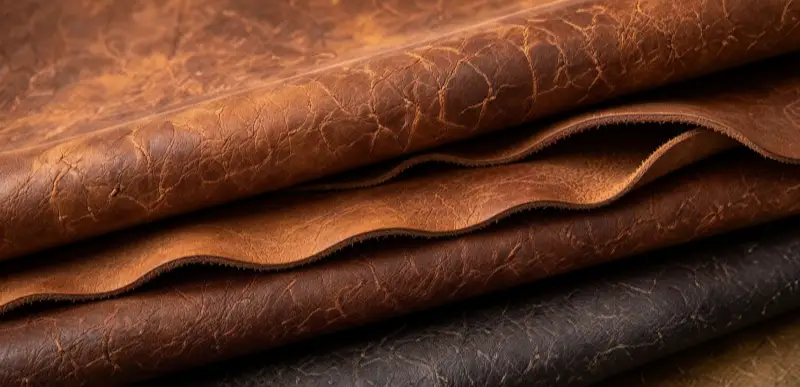
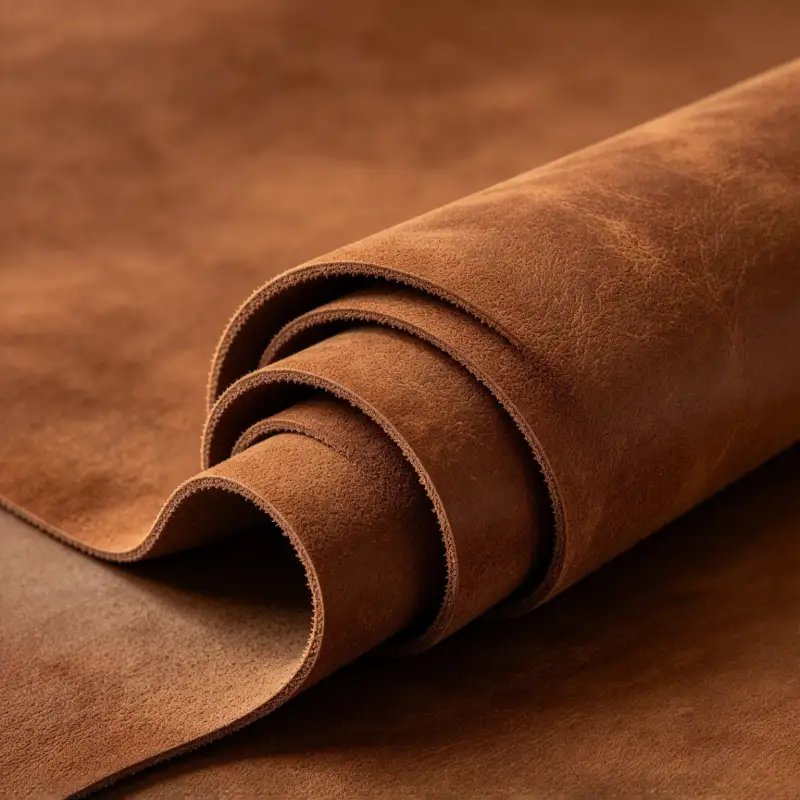
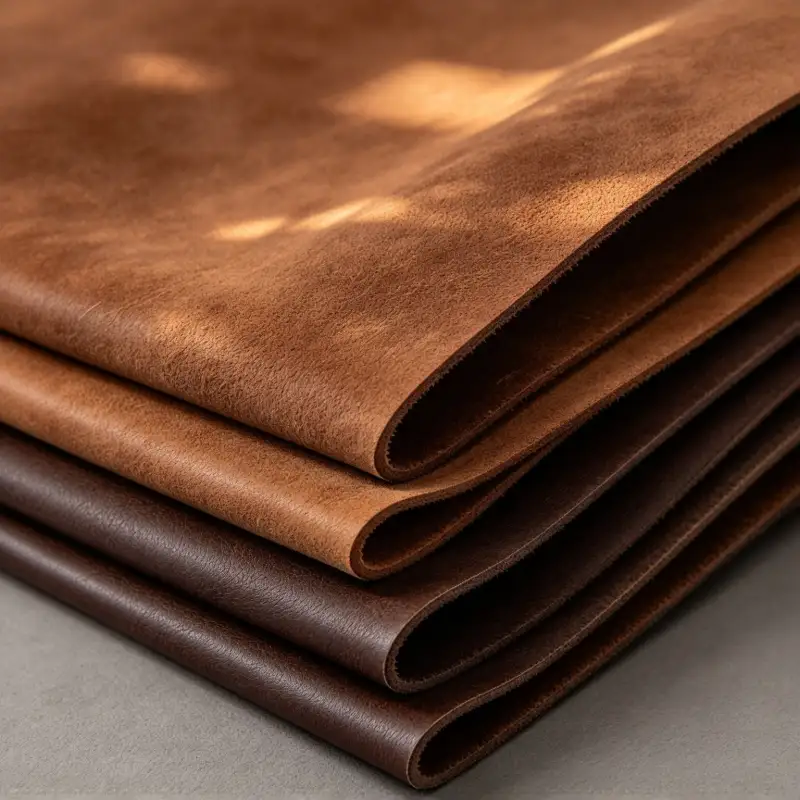
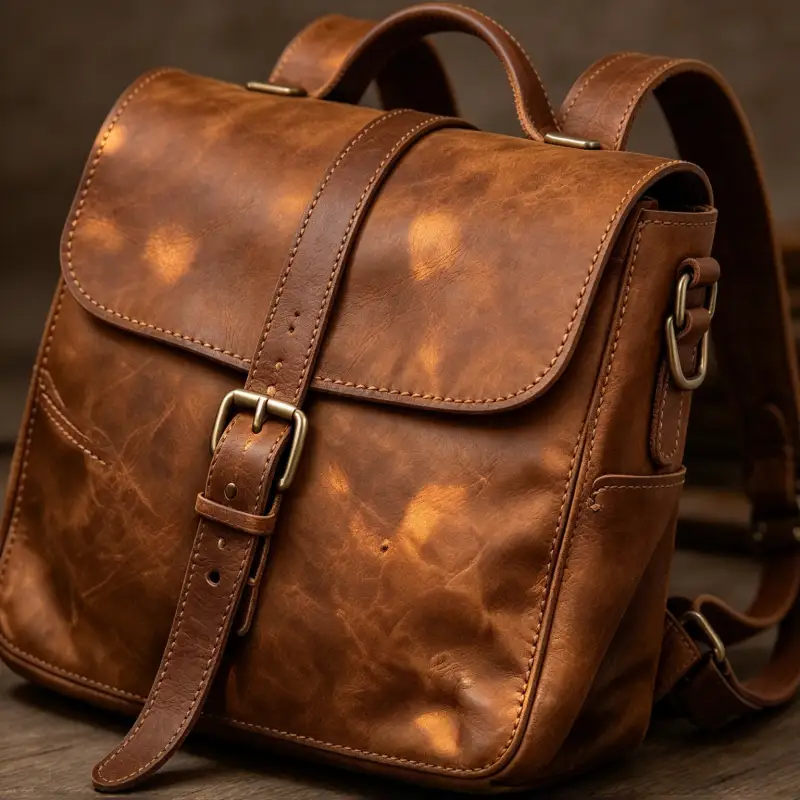
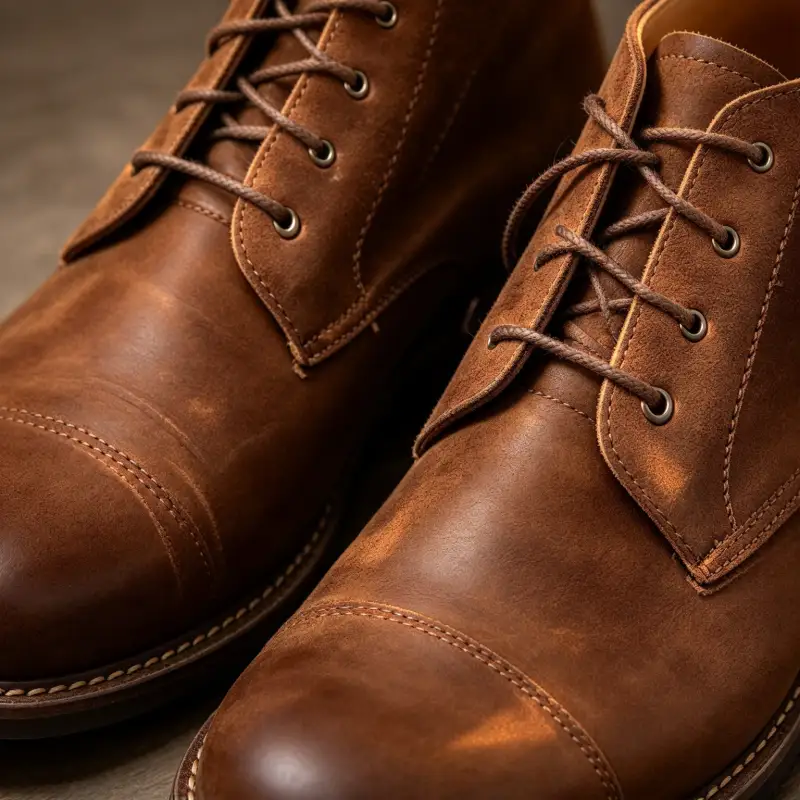
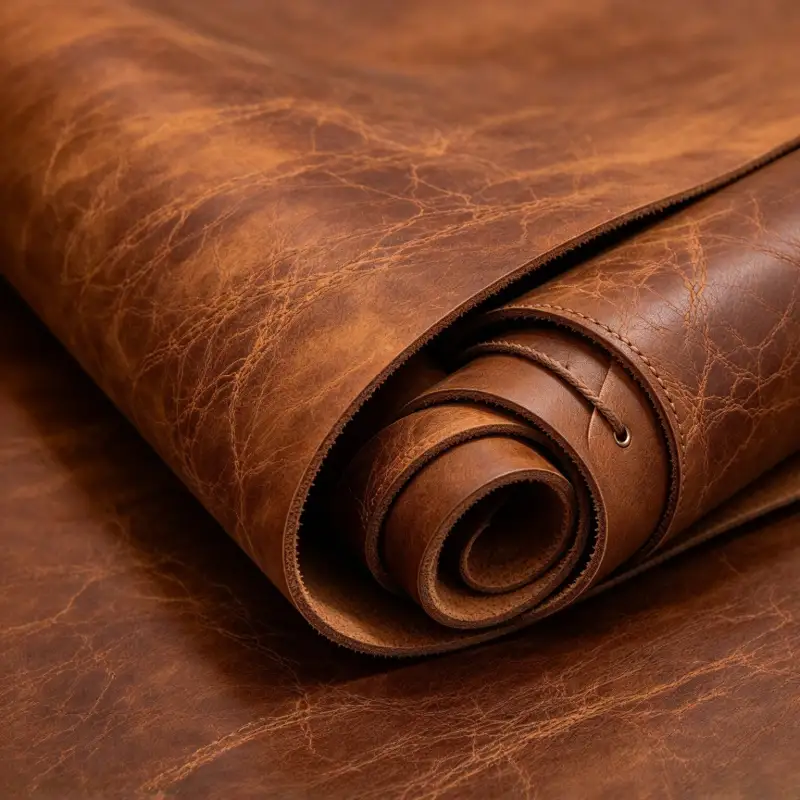
Guoyuan develops Crazy Horse-effect cow split leather for
footwear and leather goods manufacturers seeking a vintage, oil-wax surface character on a cow
split leather base. The finish is designed to create a rich, slightly distressed appearance with
subtle tonal variation. Depending on the development target, the surface can show a visible
color change when bent or handled, creating the characteristic pull-up-inspired effect
associated with vintage leather.
Color depth, tonal contrast, surface touch, finished thickness and handling response can be developed according to the requirements of the finished product.
Crazy Horse describes a finish direction rather than the animal species or underlying leather
structure.
Guoyuan's Crazy Horse-effect range uses cow split leather as the material base and combines
it with a specialized surface finishing process to create a vintage, oil-wax-inspired
appearance.
The surface can have a characteristic waxy touch and dimensional color variation. When the
material is bent or flexed, selected articles can produce a lighter or contrasting tone
along the fold, creating a pull-up-inspired visual effect.
The intensity of this effect depends on the specific finish and development specification.
Not every Crazy Horse-effect article is required to show the same level of color change.
The finish name alone does not indicate full-grain construction, a specific oil or wax
formulation, or a guaranteed pull-up effect. For purchasing, the material should be
specified according to its actual construction and approved physical reference.
Material Construction:Cow Split Leather Base + Crazy Horse-Effect
Surface Finish
Crazy Horse-effect leather can be developed with different levels of
tonal contrast and surface variation. The right target depends on whether the finished product
requires a more uniform vintage appearance or a stronger distressed and pull-up character.
Appearance When Bent
Fold the sample gently and observe the color response along the bend. If a lighter or
contrasting tone appears, evaluate:
The strength of the color change
The width and distribution of the lighter area
The transition between tones
The appearance after the material is released
Whether the effect remains consistent across the sample
A pull-up-style response should be defined using the
physical development sample.
Tonal Contrast
Tonal contrast determines how strongly the vintage character appears across the leather.
The finish can be developed toward:
Subtle Contrast — A relatively uniform base color with restrained
tonal variation.
Moderate Contrast — Visible color depth and directional variation
while maintaining a controlled overall appearance.
Pronounced Contrast — Stronger tonal movement and a more
distinctive vintage character, particularly around folds, bends and handling areas.
The preferred level should be established using a physical
reference rather than descriptive terms alone.
Oil-Wax Surface Character
The surface can be developed with a characteristic oil-wax feel and a rich, slightly aged
appearance.
Evaluate the sample for:
Surface touch
Smoothness
Wax-like hand feel
Color depth
Light reflection
Response to bending and handling
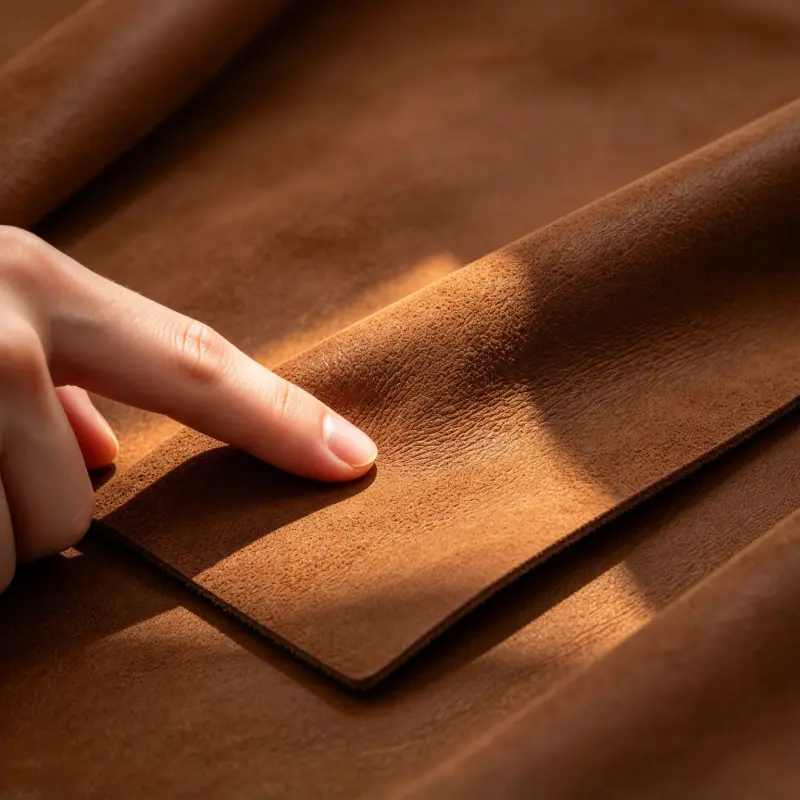
The intended surface should be evaluated on the actual
leather sample because photographs cannot accurately communicate tactile properties.
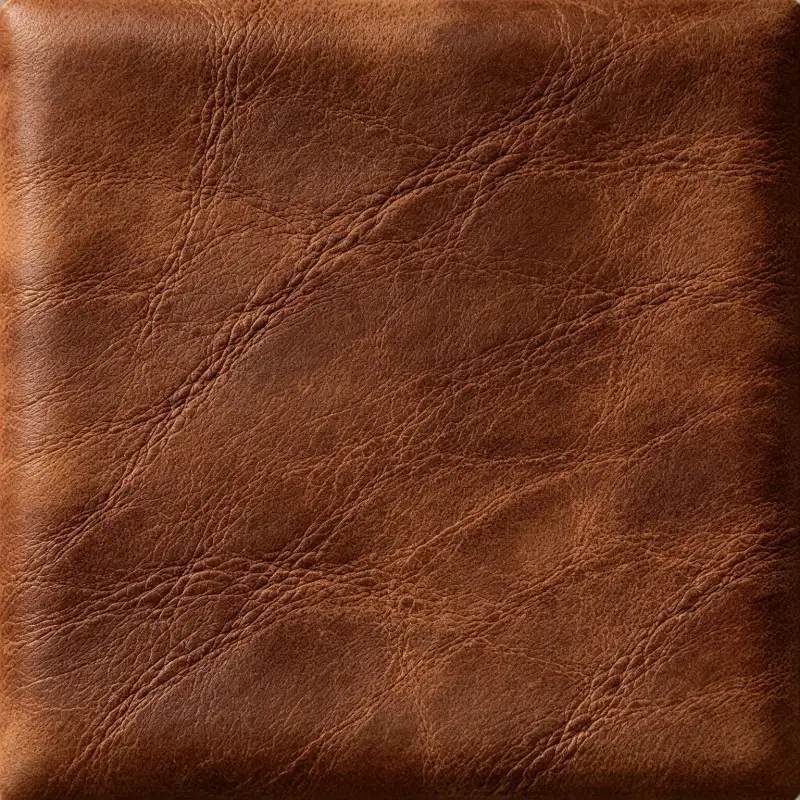
Natural Vintage Appearance
The objective is to create a controlled vintage appearance rather than an artificially
uniform printed effect.
Depending on the finish specification, subtle tonal differences can contribute to the
depth and character of the leather. For products requiring a cleaner and more consistent
appearance, the contrast and handling response can be reduced during development.
Evaluate the Pull-Up and Handling Response
The visual character of Crazy Horse-effect leather may change
when the surface is bent, rubbed or pressed. This response should be assessed according to
the intended application rather than assumed from the finish name.
Condition
What to Observe
As supplied
Base shade, tonal depth, surface touch and gloss
After bending
Color change, contrast and distribution along the fold
After releasing the bend
Recovery, remaining tonal variation and overall appearance
After light rubbing
Surface marks, color movement and local polishing
After repeated handling
Persistent color change, surface alteration and finish consistency
For development projects where pull-up behavior is important,
the approved sample should define both the initial appearance and the expected response
during handling.
Descriptive terms provide a starting point for development. The
physical reference establishes the actual appearance and behavior expected from the approved
material.
For bulk production, the approved standard should include the
agreed color, finish appearance, thickness and handling response.
Review the Finish Across Panels, Folds and Edges
For Bags & Wallets
Examine broad panels together with folded sections, edges, corners, flaps and frequently
handled areas.
A finish that appears relatively uniform on a flat panel may develop stronger tonal
contrast around folded or compressed areas.
Where the product is designed to develop a vintage appearance through use, define the
acceptable degree of tonal change before production.
Review the material after shaping and at the main flexing areas.
Pay particular attention to:
Vamp flexing
Curved lasting areas
Folded sections
Seams and panel junctions
Frequently contacted areas
Component construction can make tonal differences more visible than they appear on a
loose leather swatch.
Where the material contacts light-colored textiles, socks, linings or other components,
include the appropriate color-transfer assessment in the material requirements.
When several colors or panels are used together, compare the materials under the same
lighting conditions.
The same base color can appear different when the surface develops different levels of
tonal contrast or pull-up response.
For coordinated products, approve the physical samples together rather than separately.
Define the Vintage Character Before Production
For Crazy Horse-effect development, color alone is not enough to
define the finished material.
Base Color
The primary shade of the leather before bending or handling.
Tonal Contrast
The desired degree of light and dark variation.
Pull-Up Response
Whether the material should show a visible color change when bent.
Handling Character
The acceptable level of surface marking and tonal change during use.
Surface Touch
The desired oil-wax feel, smoothness and firmness.
Finished Thickness
The target thickness and acceptable tolerance for the intended component.
A physical reference is strongly recommended when any of these
characteristics are critical to the finished product.
Crazy Horse-Effect Leather Questions
No. Guoyuan's Crazy Horse-effect range is made from cow split leather.
“Crazy Horse” identifies the vintage finish direction and surface character rather than
the animal species.
For technical specifications and purchasing documents, the underlying material should be
identified as cow split leather.
No.
Crazy Horse-effect is a broad finish direction, and different articles can have different
levels of tonal variation.
If color lightening or tonal change during bending is an important design requirement, it
should be specifically defined and approved on the physical development sample.
The appearance is created by the interaction between the surface finishing system and the
leather structure when the material is bent or flexed.
The exact visual response depends on the specific finish formulation and development
specification.
For this reason, the required pull-up response should be demonstrated on the proposed
article rather than assumed from the product name.
The response depends on the specific finish.
Some marks or tonal changes may become less visible after handling, while others may
remain visible.
Mark recovery, surface polishing and persistent color changes should therefore be
evaluated on the proposed material according to the intended application.
Yes.
The finish can be developed toward a more restrained tonal direction with less pronounced
contrast and a more consistent overall appearance.
The preferred level of vintage character should be established during sampling.
Yes.
Where the design requires stronger tonal variation, the development brief can specify a
more pronounced contrast and a more visible response around bends and handled areas.
The final effect should always be defined by the approved physical sample.
No.
The two finishes are developed for different surface directions.
Crazy Horse-effect leather emphasizes vintage tonal variation, oil-wax character
and potential color change during bending or handling.
Nubuck-effect split leather focuses more on a fine, matte, soft and silky surface
character with subtle directional texture.
If your design requires a more restrained matte appearance with less vintage contrast,
compare Nubuck-Effect
Split Leather →.
Develop Your Crazy Horse-Effect Cow Split Leather
Send us photographs of your reference material both flat
and bent, together with a physical swatch where available.
Please include your target:
Base Color
Tonal Contrast
Pull-Up Response
Handling Character
Surface Touch
Finished Thickness
Our technical team can use these
references to recommend the appropriate cow split base and surface finishing route for your
product.
.png)
.png)
.png)
.png)