.png)
.png)
.png)
.png)

Cow Split Suede Leather
Guoyuan supplies cow split suede leather for manufacturers seeking a matte, tactile material for footwear, bags and other leather goods.
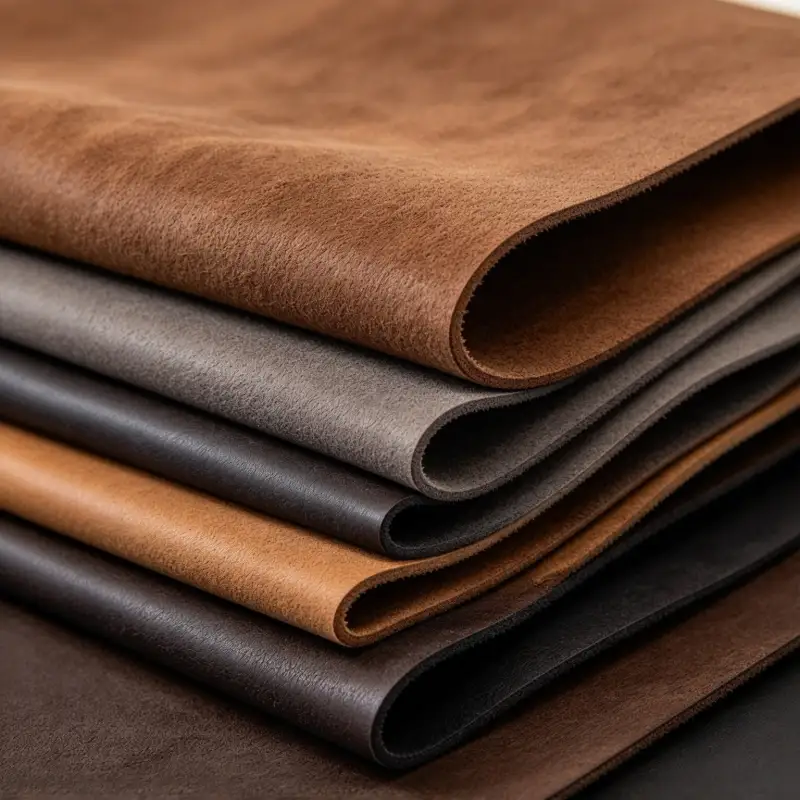
Made from a split layer of cowhide, the material features an exposed napped surface with a soft touch and low-gloss appearance. Its visual character can change subtly with the direction of the fibers, giving suede its distinctive depth and surface response.
Develop the material around nap fineness, hand feel, finished thickness, color and surface consistency according to the requirements of your product.
A Fibrous Surface with a Natural Suede Character
Cow split suede is made from a split layer of cowhide. Buffing and finishing expose and refine the leather fibers to create the characteristic suede nap.
Unlike a coated surface, the visible character comes from the exposed fibers themselves. Nap length, density, fineness, color and finishing influence how the material looks and feels.
The surface can therefore show a natural directional response when brushed or viewed from different angles. A physical swatch is especially useful when comparing suede materials, as photographs may not fully represent the nap, hand feel or directional appearance.
For the broader material structure, compare the main constructions in our split leather Material Range.
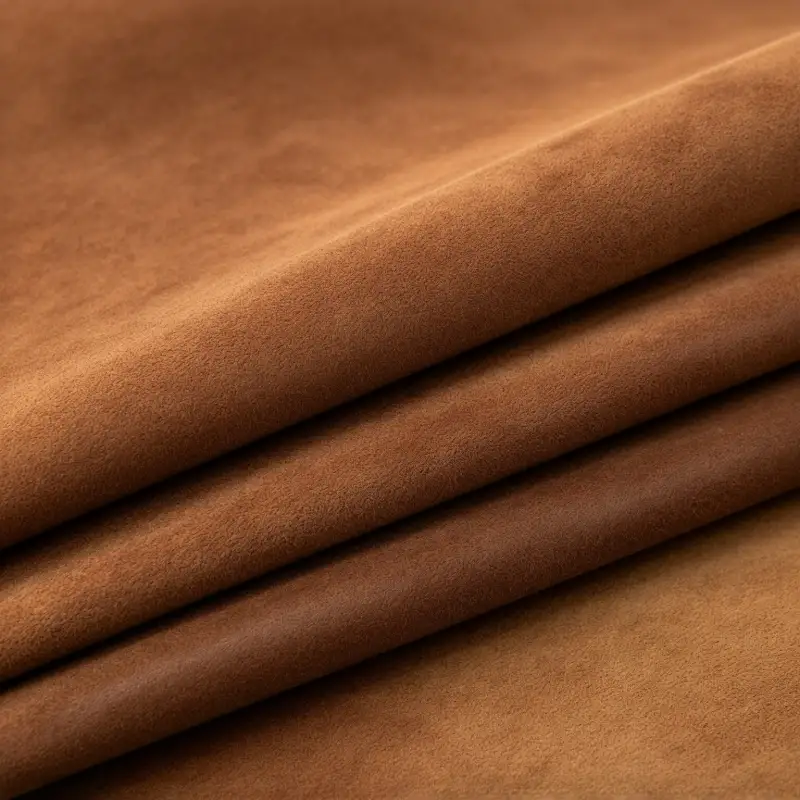
Select Suede by the Qualities You Can Compare
Choosing a suede is not only about color. The surface, hand feel and material body should be considered together with the intended application.
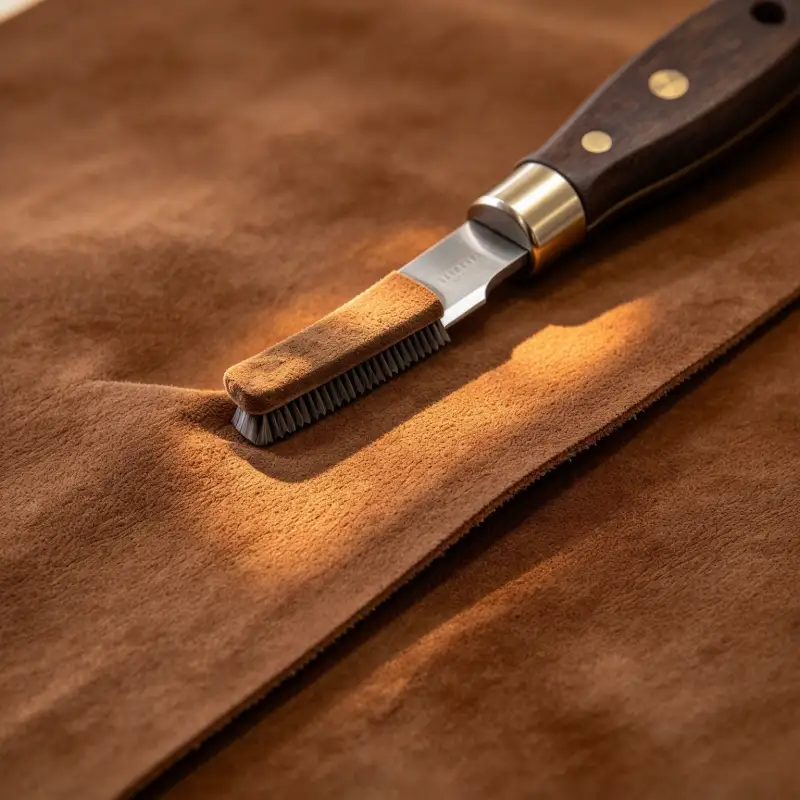
Nap Fineness and Density
Inspect the surface at close range and compare the character of the exposed fibers.
- Nap fineness
- Fiber length
- Nap density
- Surface uniformity
- Appearance after brushing
- Consistency across the usable area
If a fine or particularly uniform nap is required, define the target with a physical reference sample rather than relying only on general descriptions such as “fine suede” or “premium suede.”
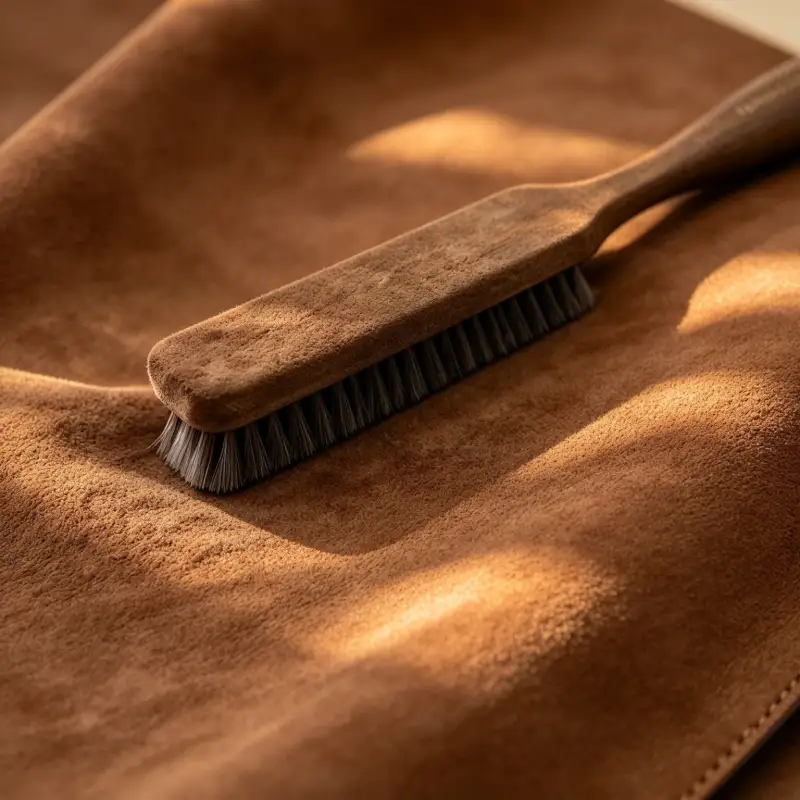
Shade and Brushing Response
Brush the suede in different directions and observe how the apparent color changes.
- Base shade
- Directional color change
- Surface depth
- Nap uniformity
- Appearance before and after brushing
This response is part of the visual character of a napped leather and should be considered when matching adjacent or paired components.
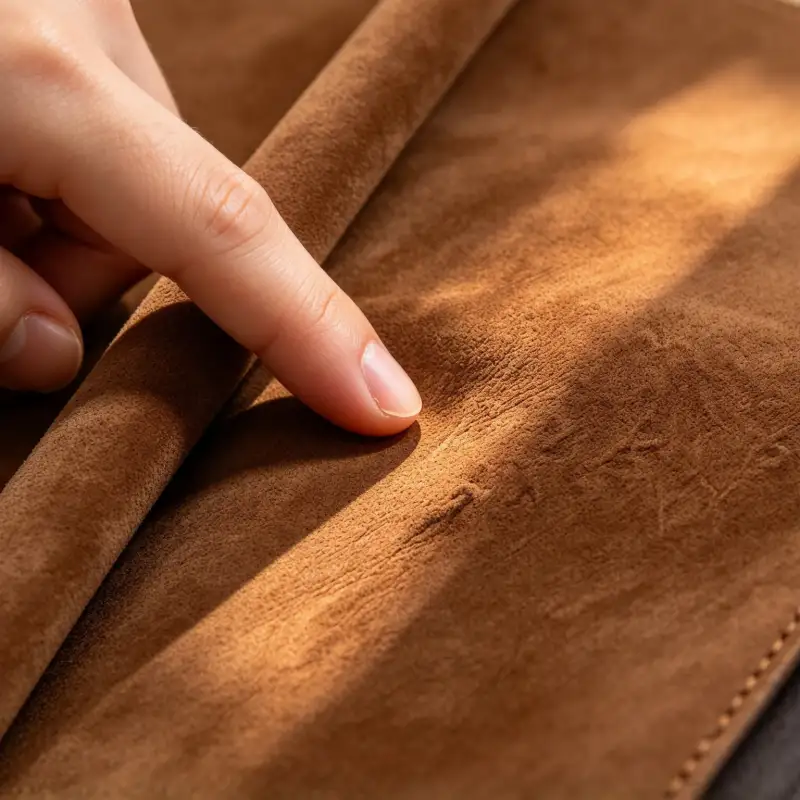
Hand Feel and Leather Body
Handle and fold the material at the intended finished thickness to assess the balance between:
- Softness
- Flexibility
- Body
- Drape
- Surface touch
Footwear components may require the material to conform around curved and flexing areas, while bags and leather goods may require different levels of body depending on the structure of the product.
Usable Area and Surface Consistency
Where possible, evaluate a larger representative piece for:
- Thickness variation
- Nap consistency
- Surface marks
- Shade variation
- Usable cutting area
- Consistency between different sections
This becomes particularly important for large panels or products requiring several visually matched components.
Account for Nap Direction When Cutting
Suede can appear lighter or darker when the nap is viewed from different directions. Two panels cut from the same material may therefore appear different if their nap orientations are reversed.
For visible paired or adjacent components, establish a consistent nap direction where visual uniformity is required.
This is particularly relevant for:
- Left and right footwear
- Matching shoe panels
- Adjacent bag panels
- Large front and back panels
- Flaps and other visible components
Assess color under consistent lighting and with the nap oriented in the same direction before deciding whether an apparent difference is caused by actual shade variation or simply by fiber direction.
Cow Split Suede Specification Guide
| Item | Development Scope |
|---|---|
| Material | Cow split suede leather |
| Base Construction | Cow split leather |
| Surface | Buffed and finished leather nap |
| Reference Finished Thickness | 1.2–1.8 mm |
| Color | Custom color development |
| Nap Character | Fineness, density and appearance matched to a reference |
| Hand Feel | Softness, flexibility and body selected for the component |
| Surface Appearance | Matte, tactile suede character with controlled nap consistency |
| Selection Criteria | Shade, nap uniformity, thickness and usable area |
| Cutting Direction | Defined where consistent nap appearance is required |
| Approval Reference | Finished sample showing complete construction |
| Application | Footwear, bags, wallets and other leather goods |
Material grades should be agreed through sample-based or measurable selection criteria wherever possible. The approved reference defines the required balance of appearance, feel and cutting suitability.
Check Color Transfer and Contact Conditions
Suede used next to light-colored textiles or linings should be assessed for color transfer under the relevant dry and wet rubbing conditions.
This assessment should be considered separately from visual shade matching. A material can match the required color while still requiring additional evaluation for contact with pale fabrics or linings.
For exposed components, include expected contact conditions in the material brief, such as:
- Moisture
- Light-colored textiles
- Linings
- Clothing
- Other leather components
- Surface soiling and handling
If a protective treatment is required, evaluate its effect on both the intended performance and the original suede characteristics, including:
- Nap appearance
- Color
- Hand feel
- Surface touch
- Overall matte character
Any treatment should therefore be assessed on the finished suede construction rather than considered separately from the material.
Assess Suede in the Finished Application
A suede that looks consistent on a small swatch can appear different after cutting, forming and assembly.
For a more representative evaluation, review the material under conditions that reflect the finished product.
Footwear
Check the suede across:
- Paired left and right components
- Vamp and quarter areas
- Curved sections
- Folded areas
- Seam and panel junctions
- Frequently contacted areas
Pay attention to nap direction when matching visible components.
Bags and Leather Goods
Inspect:
- Large front and back panels
- Flaps
- Folded sections
- Corners and edges
- Handles
- Adjacent panels
- Frequently handled areas
For larger products, assess whether the nap direction and shade remain visually consistent across the components that will be seen together.
Split Suede Questions
A change in nap direction changes how the surface reflects light, so the same suede can appear lighter or darker depending on how the fibers are positioned.
Compare samples under the same lighting and with the nap oriented in the same direction before assessing any remaining shade difference.
If nap uniformity is important, define the target with a physical reference and assess the finished material across a representative area rather than relying on a small center section.
Hand feel depends on the combination of finished thickness, leather structure, fiber characteristics and finishing.
For this reason, thickness and hand feel should be specified and approved together when developing a new suede material.
However, any treatment should be evaluated for its effect on the nap, color, surface touch and hand feel.
The treated material should be reviewed as a complete finished construction before production approval.
The material can be developed according to the requirements of footwear, bags, wallets and other leather goods.
The appropriate finished thickness, hand feel, body and surface consistency should be selected according to the component and product construction.
Define Your Suede by a Reference Sample
A clear physical reference makes suede development and production matching more efficient.
When requesting a sample, provide:
- Preferred suede reference or swatch
- Target color
- Target finished thickness
- Preferred nap fineness and density
- Required hand feel and leather body
- Intended application
- Component size
- Required cutting direction
- Expected contact with light-colored textiles or linings
- Acceptable level of natural variation
- Any required protective treatment
For larger or multi-panel products, provide approximate component dimensions where possible so that nap direction, surface consistency and usable area can be considered during development.
Guoyuan’s technical team can then review the cow split base, nap character, color, finished thickness, hand feel and application requirements and develop the material around your product.
Develop Your Cow Split Suede Leather
Bring your suede reference and product requirements to Guoyuan.
Our team can evaluate the nap fineness, density, color, finished thickness, hand feel, cutting direction and application requirements together to develop a cow split suede construction suitable for your product.